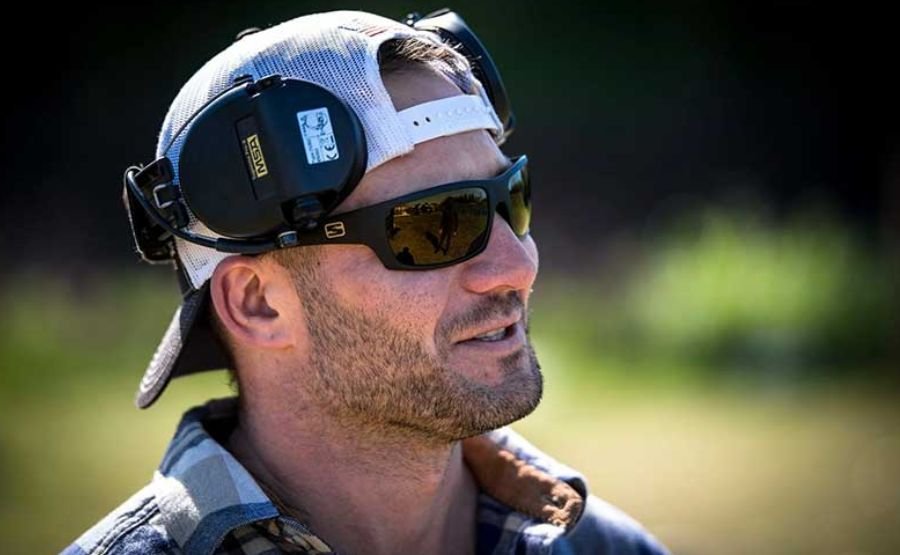
Shawn Ryan Net Worth 2026: How Much Is the Former Navy SEAL Worth?
Most people building media empires start with a communications degree and a YouTube ring light. Shawn Ryan started with a Navy SEAL trident, a CIA badge, and about 20 deployments to places most of us can’t find on a map. The fact that he’s now one of the top podcasters in America — pulling in an estimated $6 to $10 million net worth and sitting on a deal that could generate up to $10 million annually — is wild. But here’s the thing: it’s not actually surprising once you understand who this guy is.
He didn’t stumble into success. He executed it. Like he does everything.
Quick Bio
| Detail | Info |
| Full Name | Shawn Ryan Palmisano |
| Born | ~1982, Kansas City, MO; raised in Chillicothe, MO |
| Heritage | Part Japanese descent |
| Military Branch | SEAL Teams 2 and 8, U.S. Navy |
| CIA Role | Contractor, Global Response Staff (Blackwater/GRS) |
| Total Service | ~14 years (military + CIA contracting) |
| Company Founded | Vigilance Elite (2015) |
| Podcast Launched | The Shawn Ryan Show (2019) |
| YouTube Views | 2+ billion (as of early 2026) |
| Podcast Ranking | Top 10 on Spotify (2024), Top 7 on Podtrac (2025) |
| Major Deal | Daylight Media partnership (October 2025, extended 2026) |
| Estimated Net Worth | $6–$10 million (2026 estimates) |
| Based In | Tennessee |
| Family | Married to Katie Jean Ryan; two children |
The Real Name. The Real Origin.
His birth name is Sean Ryan Palmisano. That detail matters more than it sounds, because it tells you something about how he navigated the world from the start — quietly, under a different label, building something real without the spotlight.
He grew up in Chillicothe, Missouri. Small town, Midwest, son of a military pharmacist. Part Japanese in a place where that made him a target. He’s been open about people throwing slurs at him as a kid. You want to know why he’s comfortable going on a podcast and tearing into powerful people without flinching? That answer starts in Chillicothe.
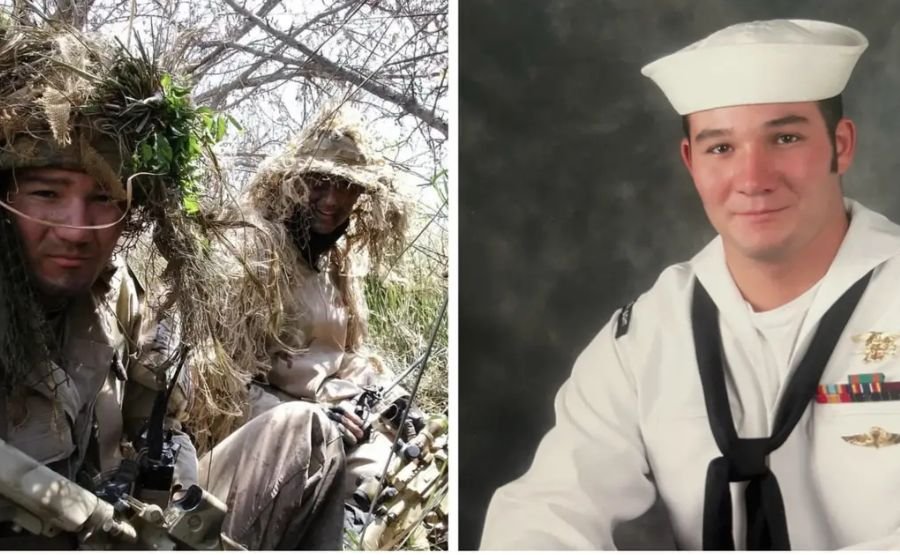
At 18 — no college, no safety net — he enlisted in the Navy with a single goal: become a SEAL. And he did it. He passed BUD/S. He earned his trident. He deployed to Haiti and Baghdad while serving with SEAL Teams 2 and 8. This was the early 2000s. Real wars. Real bullets.
Then in 2006, something interesting happened. He left the Navy — dissatisfied, by his own account. Not injured. Not forced out. Just done. He tried real estate for a minute. That’s the kind of detail that never makes the hero-worship articles, but it’s important. He wasn’t a smooth, linear success story. He stumbled around like most people do.
The CIA Chapter Nobody Talks About Enough
The real estate thing didn’t stick. But the next chapter did. Ryan transitioned into work as a CIA contractor through the Global Response Staff — the paramilitary security arm connected to the Counterterrorism Mission Center, working under the Blackwater umbrella. GRS operators exist in the deep shadows. They protect CIA case officers in hostile territories. They run clandestine security in places where the State Department isn’t officially present.
He completed over 20 deployments across 14 different conflict zones in his combined military and contractor career. That’s not a résumé line. That’s a different kind of brain — one wired for threat assessment, controlled pressure, and keeping your mouth shut until the moment it counts.
When he finally did open his mouth — with a podcast mic — he knew exactly what he was doing.
2015: The Year He Bet on Himself
When Ryan founded Vigilance Elite in December 2015, he had a simple thesis: the skills and mindset of special operations aren’t just for operators. Regular people — civilians, law enforcement — need those tools too. Active shooter events were dominating the news cycle. He saw a gap.
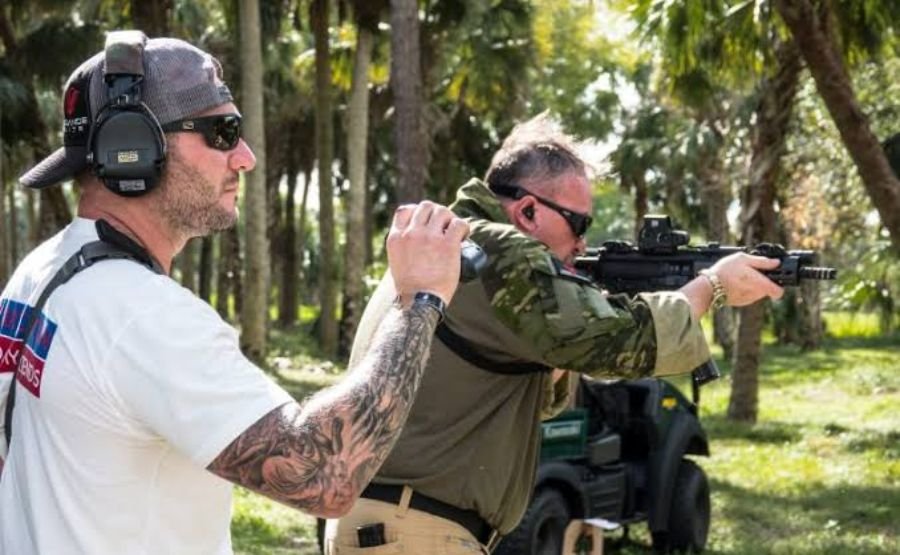
Vigilance Elite became a tactical training company. Weapons handling, threat response, the whole package. It wasn’t glamorous at first. It was grinding through building a brand from scratch in an already noisy tactical training market.
But then something clicked. The training videos caught traction online. And then one clip — an absolute rocket ship of a moment — put him on a completely different level.
Training Keanu Reeves and Breaking the Internet
Before the podcast blew up, there was this: Shawn Ryan trained Keanu Reeves for John Wick: Chapter 3 – Parabellum. The footage of that training went viral across task-and-purpose media and broader pop culture. A former Navy SEAL running an action star through real close-quarters combat and room-clearing drills. It was fascinating to watch. It was also genius marketing, even if he didn’t necessarily plan it that way.
Suddenly Vigilance Elite wasn’t just a thing for veterans and gun people. It was a name people knew.
The Podcast That Became a Platform
Ryan started The Shawn Ryan Show in 2019. The stated goal was preserving the untold stories of war — the kind veterans carry home and rarely share. He wanted it on the record.
It grew. Slowly at first, then fast, then stratospheric. By 2024, it was ranked in Spotify’s top 10 most listened-to podcasts globally. That’s not a niche military audience anymore. That’s mainstream. His YouTube channel crossed 2 billion total views by early 2026. Subscriber counts in the millions.
The guest list tells the real story of how the show evolved. Sure, military figures and veterans — Erik Prince, Eddie Gallagher, Ahmad Massoud. But also Donald Trump. Keanu Reeves. Politicians, journalists, researchers. The show stopped being just a veteran interview program and became something broader: a place for long-form, unfiltered conversation that the algorithm-driven mainstream media won’t touch.
And his audience responded. Crowdfunding has raised more than $1 million for veteran causes. That’s not just a podcast metric — that’s actual community.
The Money: Breaking It Down Honestly
Here’s where people get sloppy, so let’s be clear about what we know and what we don’t.
Net worth estimates vary wildly. You’ll see numbers anywhere from $6 million to $18 million floating around different sites. The most credible, consistently cited range from reputable analyses lands at $6 to $10 million as of 2026. The precise number is unknown to anyone outside of his inner circle. His finances are private. Don’t trust anyone who gives you a definitive figure with false precision.
What we do know about his income streams:
YouTube ad revenue — Estimated at $15,000 to $47,000 per month in 2025. That’s real money. With 2+ billion views and continuing growth, the upper end of that range is plausible.
Podcast sponsorships — This is likely the biggest driver. He was previously with Cumulus Media, which reportedly included a $500,000 minimum guarantee. His new deal blows that out of the water.
The Daylight Media deal — This is the game-changer. In October 2025, Ryan inked a strategic partnership with Daylight Media (the team behind QCODE). The deal — a revenue-share structure where Ryan keeps full ownership and creative control — is reportedly capable of generating up to $10 million annually. Daylight extended the deal through 2028 in August 2026. That’s commitment. That’s big.
The show came up at number seven on Podtrac’s monthly list of the most popular shows by September 2025. Sharing that leaderboard with Jon Stewart and Bill Maher — also Daylight clients — tells you the tier he’s operating in now.
Vigilance Elite training — Tactical courses, merchandise, gear. Revenue that preceded the podcast and continues alongside it.
Real estate holdings in Tennessee — Multiple sources cite this as part of his financial picture.
The honest summary: Ryan’s wealth is real, growing, and structurally diversified. He’s not riding a single wave.
The Broken Parts of the Story
Here’s the thing about the hero narrative that gets plastered everywhere: it skips the wreckage. Ryan has been open — unusually, almost uncomfortably open — about the invisible damage.
PTSD. Traumatic brain injuries. Anger creeping into family life. Forgetting words mid-sentence. The weight of 20+ deployments doesn’t just disappear when you hang up the gear.
In a memorable episode of his own podcast — where his wife Katie interviewed him — Ryan discussed his experience with ibogaine and 5-MeO-DMT treatments through the organization VETS. Psychedelic-assisted therapy for veterans. It was raw, it was real, and it became one of the most shared episodes he’s ever produced. He didn’t frame it as some edgy experiment. He talked about it as survival.
This advocacy — pushing for psychedelic therapy research for veterans with PTSD and TBI — is maybe the most genuinely important thing he does. It’s not popular in all circles. It’s still stigmatized. He pushed it anyway.
That’s character, not content strategy.
The Crenshaw Clash (And Why It Matters)
Late 2025 into early 2026, Ryan found himself in a very public dispute with Congressman and fellow former Navy SEAL Dan Crenshaw. Crenshaw sent a cease-and-desist letter over comments Ryan made regarding Crenshaw’s finances and other allegations. Ryan went public. Fully public. Posted the legal docs, addressed his audience directly, explained every step.
He had invited Crenshaw onto the show to hash it out. Crenshaw agreed — and then allegedly asked for special modifications to the standard release form that Ryan requires from every guest. Ryan refused to make exceptions. The interview collapsed.
Ryan’s position, simply: nobody gets special treatment on his show. Not a congressman, not anyone.
You can have opinions about the underlying dispute — there’s genuine complexity there, and both sides have their corners. But the transparency Ryan showed throughout? That’s a specific choice. He could have quietly backed down. Instead he bet that his audience would respect honesty over diplomacy. So far, they have.
The Uncomfortable Question: Is He What He Says He Is?
There’s a version of the Shawn Ryan story that’s just a very polished brand. Former special operator becomes media personality, sells tactical identity, cashes in on veteran credibility. It’s a template that exists in this space.
But the details don’t quite fit the cynical read. He didn’t take outside investment in the show. He retained full IP ownership even in his biggest deal. He uses his platform to advocate for controversial therapeutic treatments that don’t benefit him commercially. He went to the mat with a powerful political figure rather than take the easy route.
His background has some inconsistencies across sources — the exact timeline of Navy service, when he transitioned between roles — but the core facts check out across enough independent sources to be credible.
Is he perfect? No. Is the show occasionally tilted toward a particular political worldview? Yes, it is. But within that framework, he’s mostly doing what he says: having real conversations, in real depth, with people who have actually lived things.
That’s harder to fake for five years and 2 billion YouTube views than you might think.
Final Words
Here’s what I actually think about the Shawn Ryan net worth story: the number is almost beside the point.
What’s interesting is how he got there. No inherited media connections. No big studio backing. There was no viral event that gave him a following. He built something in a space people told him was too niche — military veteran interviews, long-form, unfiltered — and kept building it until it wasn’t niche anymore.
The $6-to-$10 million is the result. The process was a kid from Chillicothe, Missouri, who spent his youth being called a slur and his adult years learning to operate in the most unforgiving environments on earth, and then figuring out how to apply that same discipline to building something no one could take from him.
He owns the IP. He controls the narrative. He kept the keys.
In the influencer economy of 2026, where creators routinely sign away control for a check, that’s actually the rarest thing.
FAQs
1. What is Shawn Ryan’s net worth in 2026?
Most credible estimates put it between $6 million and $10 million. No official figure exists — his finances are private. Some clickbait sites claim $18 million or more, but those numbers aren’t supported by sourced analysis.
2. How does Shawn Ryan make his money?
Multiple streams: YouTube ad revenue (estimated $15K–$47K monthly in 2025), podcast sponsorships, the Daylight Media deal (potentially up to $10M annually), Vigilance Elite tactical training and merchandise, and Tennessee real estate holdings.
3. What is the Daylight Media deal?
In October 2025, Ryan signed a revenue-share partnership with Daylight Media for ad sales, distribution, and IP expansion of The Shawn Ryan Show. It was extended through 2028 in August 2026. The deal reportedly positions the show to earn up to $10 million per year — significantly more than his previous Cumulus Media arrangement, which included a $500K minimum guarantee.
4. Is Shawn Ryan his real name?
No — his birth name is Sean Ryan Palmisano. He’s of partial Japanese descent and grew up in Chillicothe, Missouri.
5. Was Shawn Ryan actually in the CIA?
He was a contractor, not a staff employee. Specifically, he worked for the Global Response Staff (GRS), a paramilitary security operation connected to Blackwater and the CIA’s Counterterrorism Mission Center. GRS contractors provide security for CIA personnel in hostile zones.
6. How many deployments did Shawn Ryan do?
Over 20 deployments across 14 different conflict zones, spanning his combined Navy SEAL service and CIA contracting career — a total of roughly 14 years.
7. What happened between Shawn Ryan and Dan Crenshaw?
In late 2025, Crenshaw sent Ryan a cease-and-desist over alleged defamatory claims. Ryan went public, invited Crenshaw on the show, but the interview fell apart when Crenshaw’s legal team allegedly pushed for special modifications to Ryan’s standard guest release form. Ryan refused, pulled the invitation, and told his audience the full story.
8. Did Shawn Ryan actually train Keanu Reeves?
Yes. Through Vigilance Elite, Ryan provided tactical training to Keanu Reeves ahead of John Wick: Chapter 3 – Parabellum. The training footage was released publicly and covered by outlets including GQ, Task & Purpose, and others.
9. What is Vigilance Elite?
A tactical training and consulting company Ryan founded in December 2015. It provides weapons handling, threat response, and special-operations-derived mindset training to civilians, law enforcement, and military personnel. It also produces The Shawn Ryan Show.
10. What does Shawn Ryan say about PTSD and psychedelics?
He’s a vocal advocate for psychedelic-assisted therapy — specifically ibogaine and 5-MeO-DMT — to treat PTSD and traumatic brain injuries in veterans. He’s undergone treatment himself and has openly discussed it on his podcast. He supports organizations like VETS that facilitate access to these therapies for former operators.
11. How big is The Shawn Ryan Show?
As of early 2026: 2+ billion YouTube views, millions of subscribers, top 10 on Spotify in 2024, ranked #7 on Podtrac in September 2025. It’s consistently one of the most-listened-to independent podcasts in the United States.
12. Where does Shawn Ryan live?
He and his wife Katie (married November 2019) live in Tennessee with their two children.
Read stories that rise beyond expectations with The Crest Magazine.