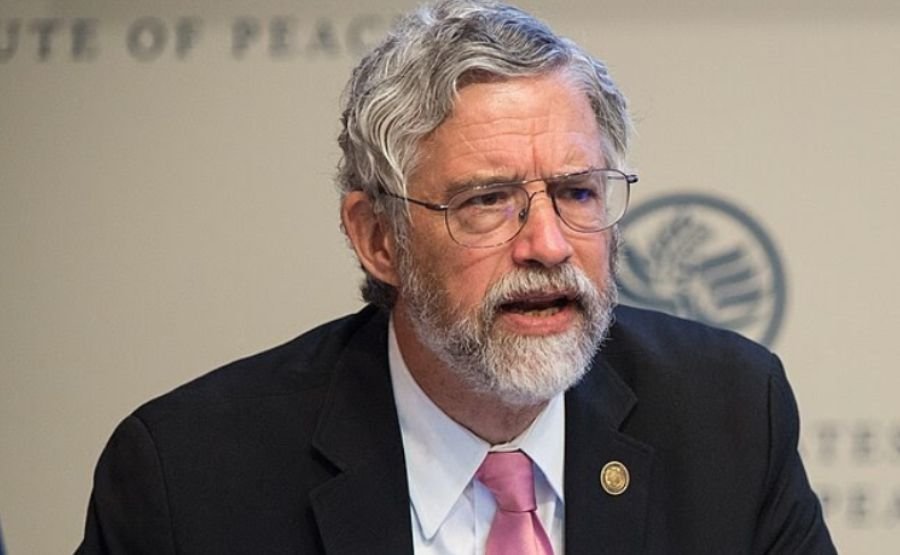
John Holdren Is the Most Controversial Scientist You’ve Probably Never Fully Understood
Here’s the problem with John Holdren. Ask a liberal scientist, and they’ll tell you he’s one of the most decorated scientific minds of the last half century. Ask a conservative commentator, and you’ll get told he’s a radical who wanted to put sterilants in your drinking water. Both of those things cannot fully be true. And neither is the whole story.
What IS true is that Holdren spent eight years as the most powerful science advisor in the United States government, holds a genius grant, accepted a Nobel Peace Prize on behalf of an international disarmament organization, helped shape the Paris climate agreement, and has been wrong — publicly, spectacularly — about at least one major prediction. He is complicated. And complicated people are worth understanding.
Quick Bio
| Detail | Information |
| Full Name | John Paul Holdren |
| Born | March 1, 1944, Sewickley, Pennsylvania |
| Grew Up | San Mateo, California |
| Education | B.S./M.S. MIT (1965/1966), Ph.D. Stanford (1970) — plasma physics |
| Field | Physics, Environmental Science, Science & Technology Policy |
| White House Role | President Obama’s Science Advisor and OSTP Director (2009–2017) |
| Record | Longest-serving presidential science advisor in U.S. history |
| Teaching | Harvard (13 years), UC Berkeley (22+ years) |
| Key Book | Ecoscience: Population, Resources, Environment (1977, co-authored) |
| Major Awards | MacArthur Fellowship (1981), Nobel Peace Prize acceptance (1995), NAS Public Welfare Medal (2022) |
| Current | Research Professor Emeritus, Harvard Kennedy School; President Emeritus, Woodwell Climate Research Center |
| Spouse | Biologist Cheryl E. Holdren |
A Kid Who Started in the Stars
Before he was anyone’s science czar or Harvard professor, John Holdren was a kid from San Mateo who went to public schools in California and became obsessed with aerospace. He got into MIT — a remarkable achievement for any era. And he didn’t coast. He majored in space science and engineering, picked up minors in physics and German literature (German literature — worth pausing on that), and then went straight to Stanford for his PhD in theoretical plasma physics.
Plasma physics. That’s the science of superheated, ionized gas — the stuff inside fusion reactors, the stuff inside stars. This was not a man dabbling in environmental politics from day one. He was a serious, technically rigorous physicist who came to environmental issues through the back door of energy research.
His dissertation at Stanford was titled “Collisionless Stability of an Inhomogeneous, Confined, Planar Plasma.” You can decide for yourself whether that sounds like the work of a radical or just a scientist.
See also “Shawn Ryan Net Worth 2026: How Much Is the Former Navy SEAL Worth?“
The Pivot Nobody Talks About
After his PhD in 1970, Holdren didn’t go straight into academia. He went to Lawrence Livermore National Laboratory — the government’s fusion energy research facility — and worked as a physicist in their magnetic fusion energy program. That’s where his real transition began. Fusion energy to environmental energy policy is a logical path when you spend enough time thinking about where civilization’s power actually comes from.
He briefly did a stint at Caltech. Then he co-founded — this is 1973, he’s 29 years old — the Energy and Resources Group at UC Berkeley, an interdisciplinary graduate program that didn’t really exist before he helped build it. He’d spend more than two decades at Berkeley. This was the intellectual home where his thinking about population, resources, and environment really crystallized.
That Berkeley period shaped everything that followed. Including the stuff that would haunt him.
The Book That Refuses to Die
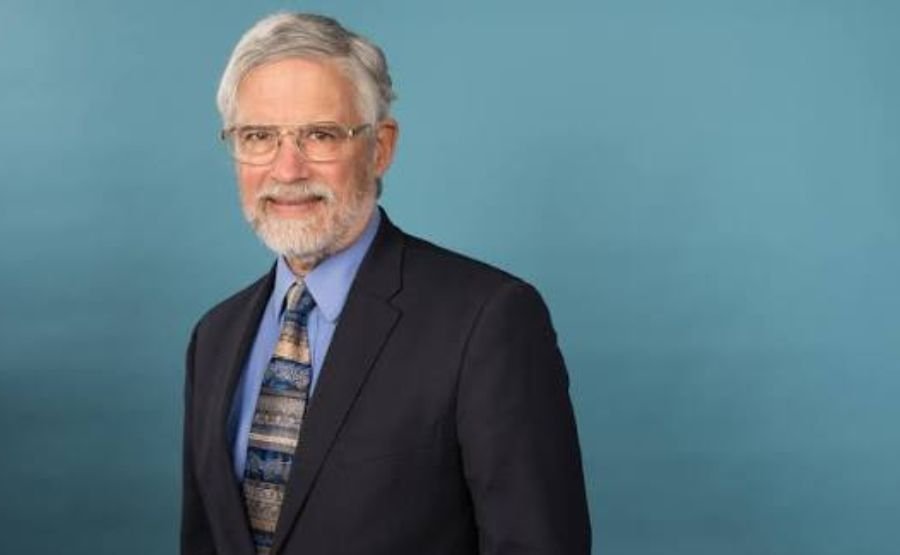
Let’s just address it. In 1977, John Holdren co-authored a 1,000-page textbook with biologists Paul and Anne Ehrlich called Ecoscience: Population, Resources, Environment. It was a college-level environmental science text. And it contained passages discussing possible approaches to population control — including compulsory abortion, forced sterilization, and adding infertility agents to water supplies.
The passages described these things. The question was always whether the authors advocated for them. Holdren and the Ehrlichs have consistently said they were laying out a range of proposals that existed in the policy literature, not endorsing them — and that their actual preference was for voluntary, noncoercive approaches.
Here’s what complicates that defense: a 1,000-page textbook isn’t a news article summarizing someone else’s ideas. You write what you write. And the framing of those passages, read charitably, presents these measures as potentially justifiable if overpopulation became severe enough. That’s a different thing than neutrally cataloguing them.
Then in 2009, thirty-two years later, these passages exploded on the internet the moment Obama nominated Holdren to be his science advisor. Glenn Beck made it his cause. Fox News ran with it. Holdren’s office issued denials. The Senate confirmed him anyway — unanimously. That last part tends to get buried.
He testified clearly at his confirmation that he does not believe the government should determine optimal population size and that he never endorsed forced sterilization. The Senate heard him. Every single senator, of both parties, voted to confirm him. So either they all failed due diligence, or they looked at the actual record and made a judgment call.
He Was Also Just… Wrong Once
This part matters. And it matters precisely because Holdren has spent decades being held up as someone whose scientific judgment we should trust on existential questions.
In 1980, Holdren was part of the famous Simon-Ehrlich wager. Julian Simon, a libertarian economist, challenged Paul Ehrlich to a bet on whether five commodity metals would become more expensive or cheaper over the next decade — a proxy for whether population growth would cause resource scarcity. Ehrlich accepted. He consulted with Holdren and ecologist John Harte to pick the five metals: chromium, copper, nickel, tin, and tungsten.
By 1990, the inflation-adjusted prices of all five had dropped. Ehrlich mailed Simon a check for $576.07. The bet was lost.
Now, debates about what that wager actually proved are legitimate. Resource prices are complicated. The 1980s oil shock and global recession affected prices in ways that muddied the signal. And Simon’s “human ingenuity beats scarcity” thesis isn’t universally proven by one decade of one commodity basket. But the wager was still lost. Holdren helped choose the losing strategy. His predictions — or those of people whose judgment he shared and shaped — didn’t hold up.
This is worth sitting with. Not because it disqualifies him, but because it’s a reminder that even the most credentialed, most decorated scientific minds in the world can be confidently wrong about big predictions. And Holdren has been confidently emphatic about a lot of things for a very long time.
The Nobel Peace Prize Moment (The Real One)
Here’s something that deserves more attention than it gets. In 1995, John Holdren walked into a ceremony in Oslo, Norway, and delivered one of the two Nobel Peace Prize acceptance lectures. Not for his own individual work. For the Pugwash Conferences on Science and World Affairs — an international organization of scientists, scholars, and public figures dedicated to reducing nuclear weapons.
Holdren had been involved with Pugwash since 1973. By 1987 he was chairing their executive committee. He was, by multiple accounts, the chief architect of their public statements during the critical post-Cold War period. The Nobel Committee gave the award partly to recognize that the nuclear threat hadn’t vanished with the Soviet Union — it had just changed shape. Holdren stood at that podium in Oslo and made that case.
This is a man who started his career studying the physics of stars and plasma, pivoted to thinking about energy and environmental survival, and ended up on a Nobel stage arguing for nuclear disarmament. The intellectual arc is genuinely unusual. It’s also not the arc of someone who’s just a political hack dressed in scientific credentials.
The MacArthur Grant — and What It Actually Means
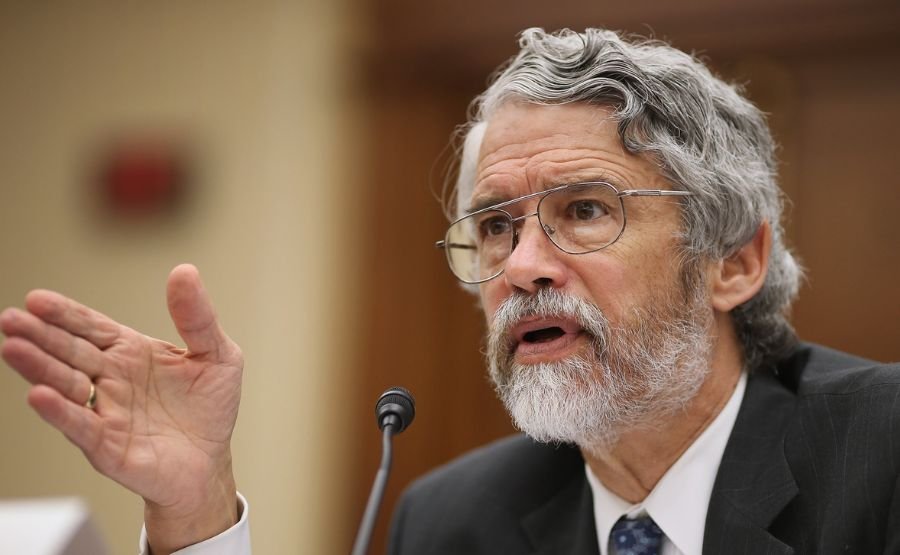
In 1981, Holdren received one of the very first MacArthur Foundation fellowships. These are the so-called “genius grants” — five years of no-strings-attached funding given to people the foundation believes are doing exceptional work that the world needs more of.
He wasn’t a household name yet. He was a Berkeley professor doing interdisciplinary work on energy and the environment that didn’t fit neatly into any single department’s expectations. The MacArthur Foundation looked at the body of work and decided he was worth investing in. That’s meaningful independent validation from an institution with no political stake in making it happen.
What’s also interesting: years later, from 1991 to 2005, Holdren would serve as vice-chairman of the MacArthur Foundation’s board of trustees. From genius grant recipient to board member. That’s a full arc.
Eight Years in the White House
Obama nominated Holdren in December 2008 — one of his first major science-related appointments. The signal was clear: this administration was going to take science seriously as a policy matter.
What did eight years actually look like? Holdren coordinated the federal government’s response to the H1N1 flu outbreak, the Deepwater Horizon oil spill, the Ebola crisis, and the Fukushima nuclear disaster. Four major crises, four different scientific and policy challenges, all running through his office as the president’s science adviser.
He was one of the architects of the Obama Climate Action Plan. He helped drive the bilateral US-China greenhouse gas agreement that became the foundation for the Paris Agreement in 2015. He oversaw the policy push that created the Presidential Innovation Fellows program, embedding top private-sector talent inside federal agencies. He pushed hard for open government data and scientific integrity standards across the executive branch.
Was all of this effective? Partially. Carbon emissions did drop during the Obama years — about 9 percent while the economy grew by 10 percent. The Paris Agreement happened. A lot of the infrastructure he helped build was subsequently dismantled after 2017, which complicates any assessment of lasting impact.
He became, in eight years, the longest-serving presidential science advisor in the history of the position. That’s dating back to World War II.
The “Science Czar” Problem
The media nickname “science czar” was meant to be pejorative. It worked. It made a Senate-confirmed government official sound like an unelected ideological operative. And once the Ecoscience controversy hit in the summer of 2009, the nickname locked in.
Here’s the thing though: the position Holdren held — Assistant to the President for Science and Technology — is one of the most important, most under-covered jobs in the federal government. The science advisor shapes what research gets funded, which technologies get prioritized, how the government responds to emergencies that require scientific expertise. It’s a role that affects millions of people’s lives in ways that never generate clicks.
Turning it into a “czar” story — a word that conjures unaccountable power — obscured what the office actually does. And that obscuring was convenient for people who didn’t want serious climate or environmental policy in the first place.
Where He Is Now
Holdren formally retired from his Harvard professorship in June 2021 at age 77. He’s now Research Professor Emeritus at Harvard’s Kennedy School, still affiliated with the Belfer Center. He’s President Emeritus and Senior Advisor at the Woodwell Climate Research Center in Falmouth, Massachusetts — the same organization he led from 2005 to 2009 before heading to the White House.
In 2022, the National Academy of Sciences gave him its Public Welfare Medal — the Academy’s highest honor — recognizing his fifty-year career. He remains one of the most decorated scientists in American public life. He also remains one of the most controversial figures in the specific niche of science-politics overlap.
Final Words
Here’s my honest take on John Holdren. He’s someone who spent five decades doing genuinely important work at the intersection of science and policy — work on nuclear disarmament, climate change, and energy that was often ahead of mainstream political consensus. He earned his credentials. He earned his awards. The Nobel moment in Oslo was real. MacArthur deserved.
He also co-wrote a book in 1977 that contained passages no scientist would publish today without expecting to be called to account for them. The defense — “we were describing ideas, not endorsing them” — is weaker than it should be for a 1,000-page textbook co-authored at mid-career. And his track record on catastrophist predictions has been mixed, to put it charitably.
What I actually think is this: John Holdren is a brilliant man who has spent so long being certain that civilization is on the edge of catastrophe that certainty itself became a reflex. Some of those warnings were right. Some weren’t. The right response to his record isn’t to call him a monster or to call him a saint. It’s to engage with the actual work — the plasma physics, the Pugwash speeches, the climate policy architecture — and think carefully about which of his urgent warnings turned out to be right, and which turned out to be the price of being a scientist who raised his voice too loud for too long.
That’s a more useful exercise than a meme about drinking water.
FAQs
1. Who is John Holdren?
He’s a physicist and environmental scientist who served as President Obama’s science advisor from January 2009 to January 2017 — the longest anyone has held that position since it was created during World War II. Before that, he spent decades teaching at Harvard and UC Berkeley and researching energy, climate, and nuclear arms control.
2. What was the Ecoscience controversy?
In 1977, Holdren co-authored a 1,000-page environmental science textbook with Paul and Anne Ehrlich. The book discussed possible population control measures including compulsory abortion and sterilization. When Obama nominated Holdren in 2009, bloggers and commentators — including Glenn Beck — claimed the passages showed he personally advocated these policies. Holdren and his co-authors denied they were advocating; they said they were describing ideas that existed in the policy discourse. PolitiFact rated Beck’s claims as “false” after reviewing the full text. The Senate confirmed Holdren unanimously.
3. Did John Holdren actually propose sterilants in drinking water?
No. The Ecoscience passages discussed various population-control approaches that had been proposed by others, including the theoretical idea of adding sterilants to water supplies. The context, at least according to the authors, was descriptive, not prescriptive. The authors explicitly stated their preference for voluntary, non-coercive approaches. Whether you find that defense fully convincing is a fair judgment call — but “he proposed putting sterilants in the water” is not an accurate summary of what the book says.
4. What is the Simon-Ehrlich wager and what does it have to do with Holdren?
In 1980, economist Julian Simon bet biologist Paul Ehrlich $1,000 that five commodities Ehrlich chose would get cheaper, not scarcer, over the next decade. Holdren (along with ecologist John Harte) helped Ehrlich choose the five metals. By 1990, prices on all five had dropped in real terms. Ehrlich sent Simon a check for $576.07. It’s one of the most famous lost bets in the history of science-economics debates.
5. Was John Holdren at the Nobel Peace Prize ceremony?
Yes. He chaired the executive committee of the Pugwash Conferences on Science and World Affairs and delivered one of the two acceptance lectures when Pugwash received the Nobel Peace Prize in Oslo in December 1995. The prize recognized Pugwash’s decades of work to reduce nuclear weapons.
6. What is a MacArthur Fellowship and did Holdren really get one?
Yes, he did — in 1981, as one of the very first recipients. The MacArthur Fellowship, often called the “genius grant,” is a five-year, no-strings-attached financial award given to people the MacArthur Foundation considers exceptional. Holdren received it for his interdisciplinary work at the intersection of energy, environment, and public policy.
7. What did Holdren actually do as Obama’s science advisor?
He coordinated scientific responses to the H1N1 flu, Ebola, Deepwater Horizon, and Fukushima. He was a principal architect of the Climate Action Plan. He helped shape the bilateral US-China climate deal that led to the Paris Agreement. He pushed for scientific integrity standards across federal agencies and championed open government data. He served from 2009 to 2017 — eight years.
8. Where did Holdren study?
MIT for his bachelor’s and master’s degrees (1965 and 1966), specializing in aerospace engineering with physics and German literature minors. Then Stanford for his PhD in theoretical plasma physics in 1970.
9. What’s the “science czar” nickname about?
It was a pejorative label used by critics — particularly after the Ecoscience controversy in 2009 — to make his Senate-confirmed position sound more sinister than it was. The actual title was Director of the White House Office of Science and Technology Policy and Assistant to the President for Science and Technology. “Science czar” made better headlines.
10. Is Holdren still active?
Yes, though retired from formal professorships in June 2021. He holds an emeritus research position at Harvard’s Kennedy School, serves as President Emeritus and Senior Advisor at the Woodwell Climate Research Center, and received the National Academy of Sciences’ Public Welfare Medal in 2022 — that Academy’s highest honor.
11. What is the Woodwell Climate Research Center?
Formerly the Woods Hole Research Center, it’s an independent nonprofit climate science organization in Falmouth, Massachusetts. Holdren directed it from 2005 to 2009, returned as a senior advisor in 2017, and remains connected today. It was named the world’s top climate change think tank four years in a row by the International Center for Climate Governance.
Read stories that rise beyond expectations with The Crest Magazine.